

We may earn money or products from the companies mentioned in this post.
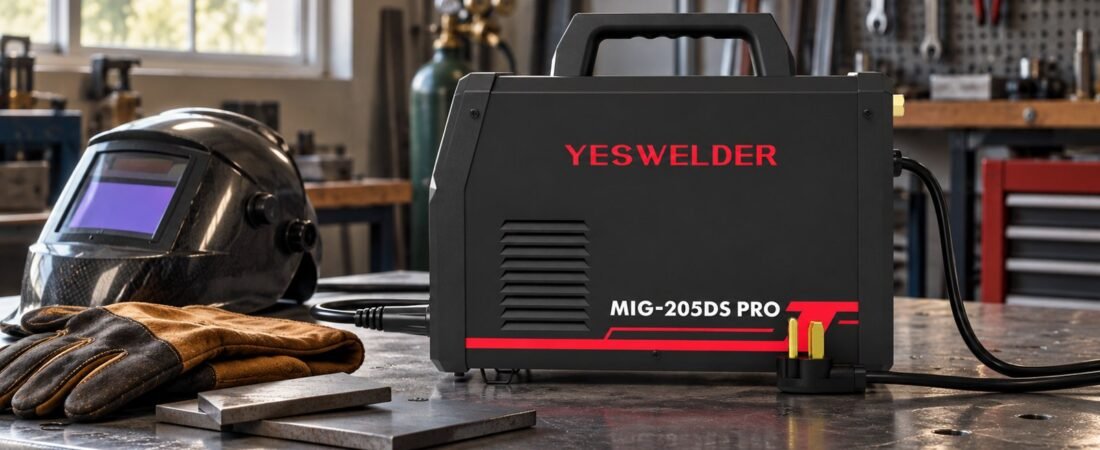
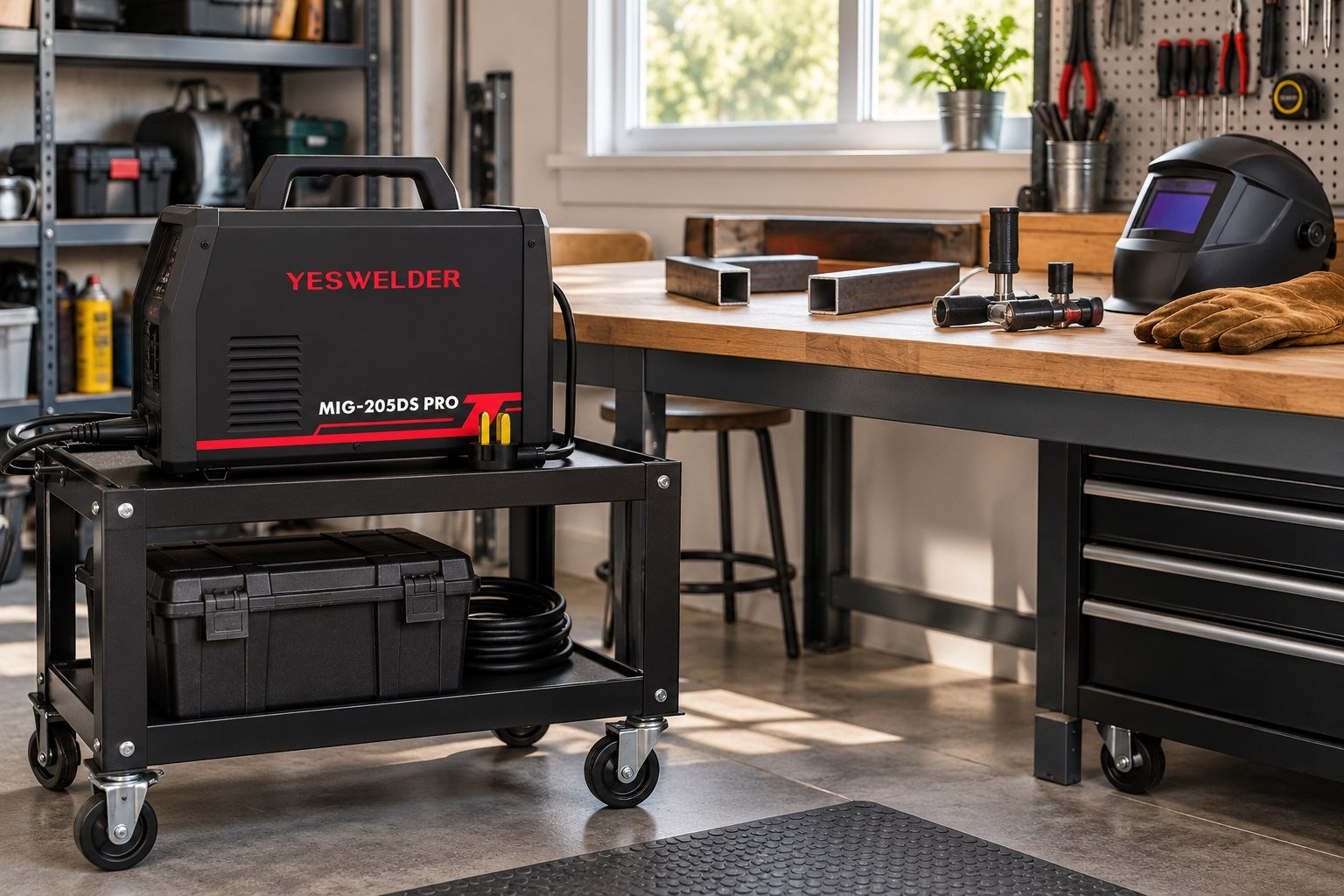
Featured image: AI-generated workshop illustration based on the manufacturer’s product photo. It does not document hands-on testing.
The YESWELDER MIG-205DS PRO packs MIG, flux-core, stick, and DC lift TIG into a portable dual-voltage machine aimed squarely at home garages. This research-based review examines specifications, owner discussions, and purchase tradeoffs rather than claiming hands-on testing.
Quick verdict
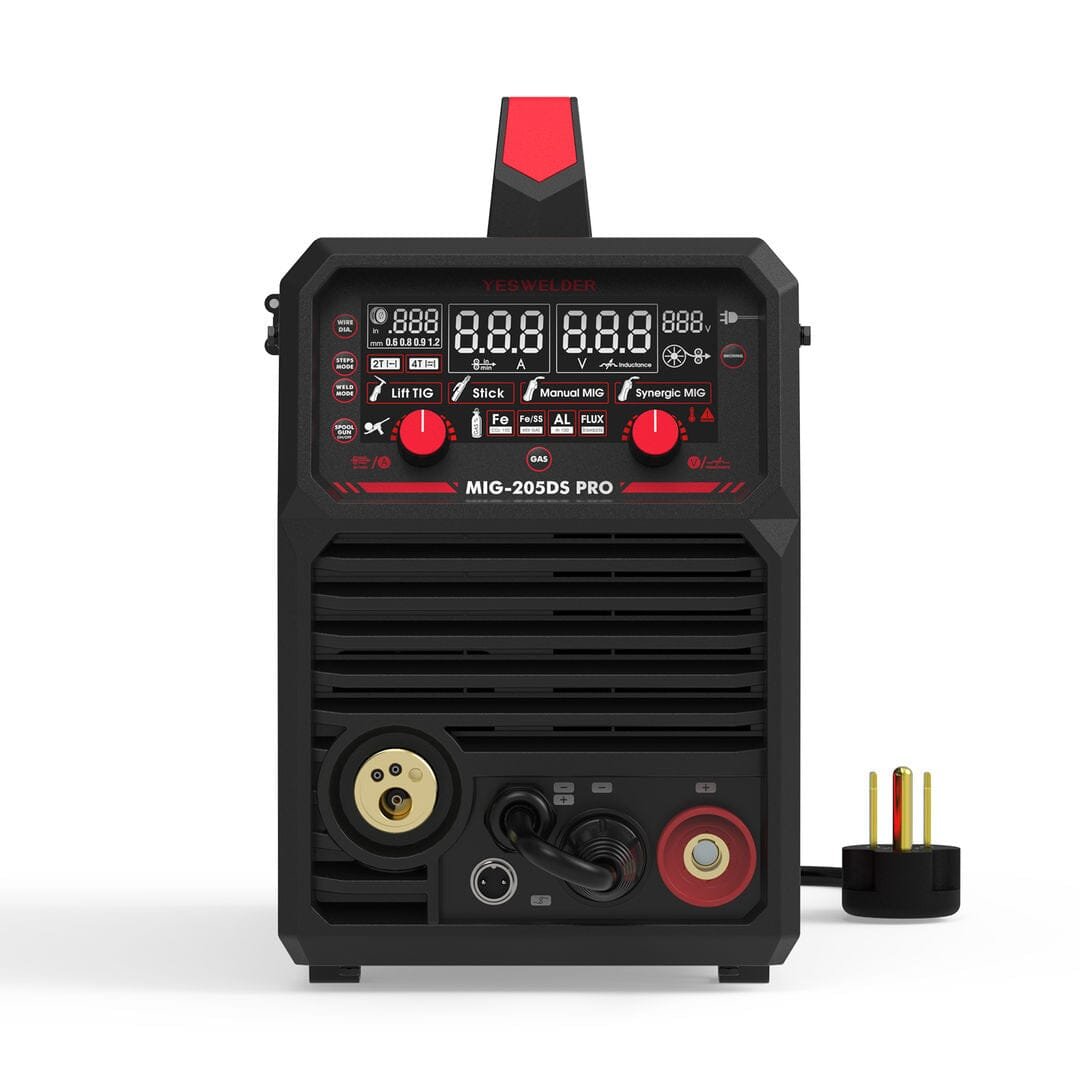
The MIG-205DS PRO is a sensible choice for a budget-conscious DIY buyer who wants to learn MIG, tackle repairs and small fabrication projects, and keep stick or lift TIG available. It runs from 120V or 240V, handles gas MIG and flux-core, and supports aluminum wire through its supplied liner or an optional spool gun.
The compromises matter. The included MIG gun is pictured with a 150A label although the machine advertises 205A on 240V, a pairing worth clarifying with YESWELDER if maximum-output work is planned. TIG is basic DC lift TIG, the torch costs extra, and aluminum requires MIG equipment.
For occasional garage work, those limits may be acceptable. Buyers planning regular high-output fabrication, aluminum TIG, or work where downtime matters should compare machines and support networks built for those demands.
Specifications
| Specification | YESWELDER MIG-205DS PRO |
|---|---|
| Input power | 110/120V or 220/240V |
| MIG output | 30–160A on 120V; 30–205A on 240V |
| Processes | Gas MIG, flux-core MIG, aluminum MIG, DC lift TIG, stick |
| Weight | 22.7 lb |
| Advertised MIG duty cycle | 60% at 160A on 120V; 60% at 205A on 240V, at 40°C |
| Standard MIG gun | 10 ft YW-L150-10E |
| TIG control | Lift start; no foot-pedal control |
| Warranty | Product page advertises two years; confirm the exact policy before purchase |
The MIG ranges, operating modes, spool sizes, and duty-cycle claims come from YESWELDER’s wholesale model page. The current retail MIG-205DS PRO page supplies the weight and package details. The stated duty cycles are manufacturer specifications and were not independently verified for this review.
What comes with the standard machine
YESWELDER lists a work clamp, electrode holder, 10-foot YW-L150-10E MIG gun, voltage adapter, drive rollers, graphene liner, and gas hose.
Budget separately for a regulator, shielding gas, wire, TIG torch, and spool gun. The attractive machine price can expand quickly when a buyer tries every process.
Pros and cons
Pros
- Dual-voltage operation makes it practical for a garage today and a 240V circuit later.
- Gas MIG, flux-core, stick, lift TIG, and spool-gun compatibility cover many hobby projects.
- At 22.7 pounds, it is easy to move or store between jobs.
- Manual MIG adjustment remains available when synergic settings do not suit the joint or technique.
- Synergic MIG can simplify the starting setup for a new operator.
- The feeder accepts D100 and D200 spools, including 10-pound wire spools.
- Included rollers support common solid, flux-core, and aluminum wire setups.
- Owner discussion supports its appeal for occasional home use and learning.
Cons
- The included YW-L150-10E gun raises a reasonable capacity question beside the advertised 205A maximum.
- TIG is DC lift-start only, with no foot pedal and no AC aluminum capability.
- Aluminum MIG requires additional equipment and careful wire feeding.
- Advertised output and duty cycle lack an independent exact-model instrumented test in the sources reviewed.
- The manual and package variations deserve close checking before purchase.
120V versus 240V
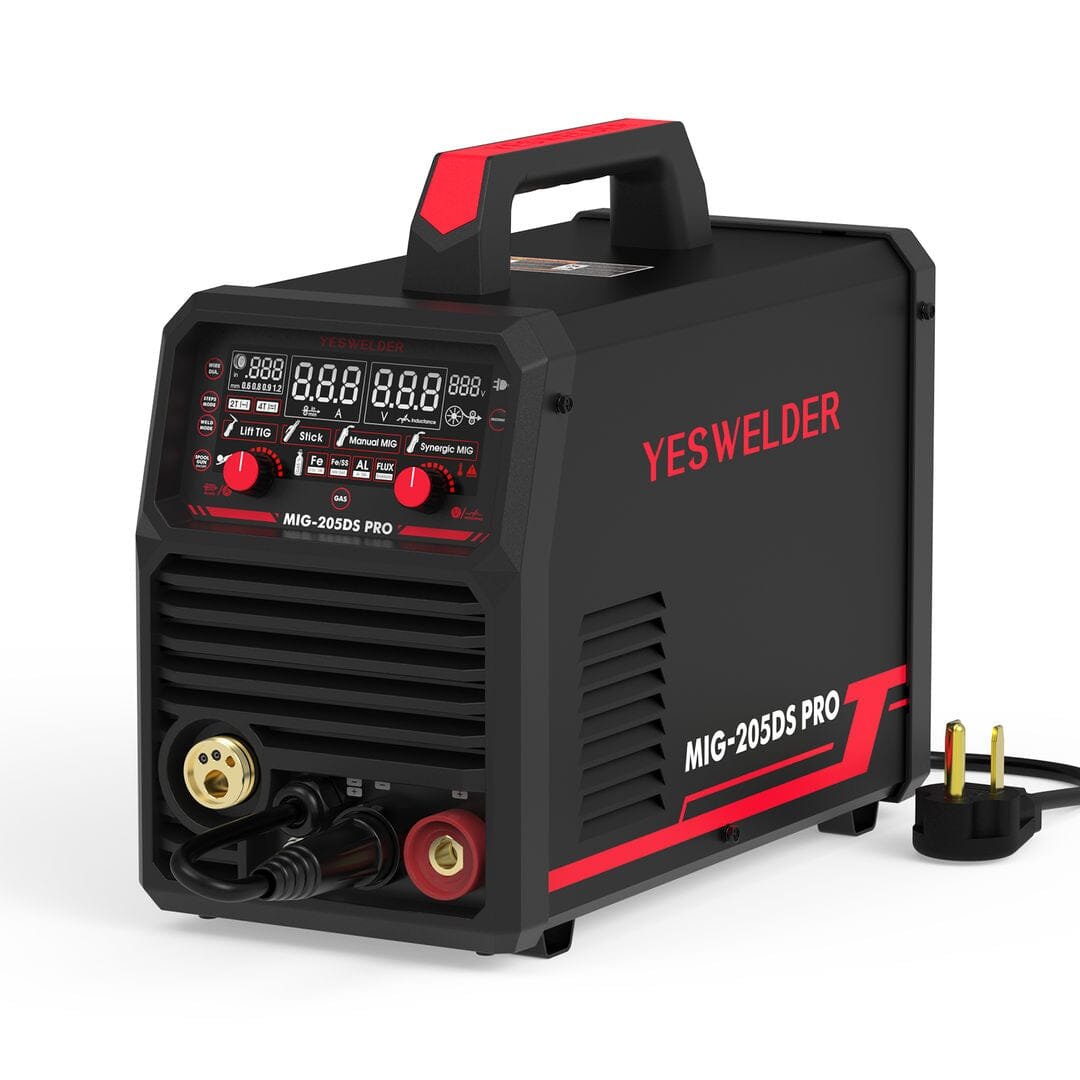
The two input voltages are not equivalent. On 120V, the listed MIG ceiling is 160A. That can suit thin material, short repairs, and practice. One exact-model owner reported consuming several pounds of electrodes and several flux-core spools on 120V, on ordinary home-shop projects. This is an anecdote, not a measured output test.
On 240V, the advertised MIG ceiling rises to 205A. Dual voltage does not mean full output is available from any household outlet. Follow the manual and the rating of the circuit in use; have a qualified electrician assess circuits and connections when needed.
For choosing equipment around real projects, see how to choose a MIG setup around your actual work.
Aluminum and TIG limits
The MIG-205DS PRO supports two aluminum-feed routes: a compatible spool gun, or the standard gun with its supplied graphene liner and appropriate roller. In one exact-model Reddit thread, contributors agreed that a U-groove roller supports soft aluminum wire but disagreed about regular push-gun reliability. Birdnesting is the concern. Keeping a suitable lined gun path short and straight matters; a spool gun places the soft wire close to the torch.
YESWELDER’s official FAQ explains that its MIG-platform TIG function is DC only, uses lift start, and does not support a foot pedal. It can cover steel and stainless work but cannot provide conventional AC TIG for aluminum. A TIG-focused buyer should compare dedicated machines.
What owners ask before buying
The small exact-model Reddit sample identifies questions rather than proving performance.
One buyer comparing the PRO with a Titanium MIG machine planned occasional MIG and aluminum garage projects. Nearby warranty help favored Titanium. A commenter questioned the advertised amperage without independent evidence. That was skepticism, not a test result.
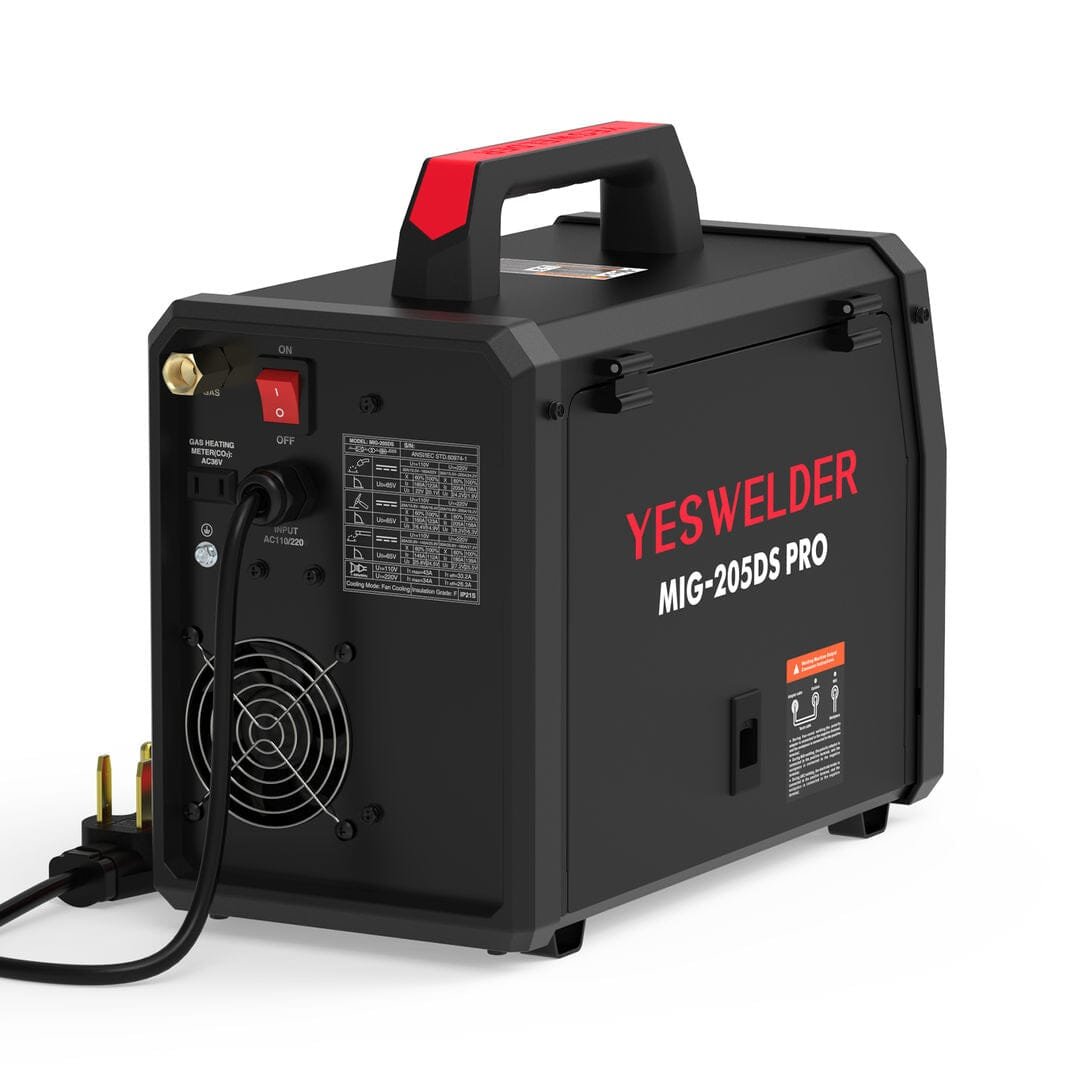
Another buyer asked why the 205A machine includes an apparently 150A MIG gun. The separate YW-L150-10E gun page shows a 150 Amp label in its product image and identifies its Euro connector and YW100L consumables. The page does not state a continuous duty rating in its current text. The pairing is a reasonable pre-purchase question, not proof of a defect or unsafe design. Ask YESWELDER how the supplied gun is rated for the planned output and duty cycle before assuming an upgrade is required.
A broader discussion of inexpensive welders contains the strongest exact-model report: substantial stick and flux-core use on 120V with a positive conclusion. Other participants favored cheap machines for intermittent home work over production. These are individual experiences.
Retail-owner feedback is positive overall but needs careful reading. On the Walmart review page, the snapshot checked showed 4.7 from 200 ratings, with recurring comments about ease of setup, value, and flux-core results. The page mixes product variants, syndicated reviews, and some incentivized entries, so neither the aggregate nor those themes are independent performance proof.
Real ownership cost
The bare machine was listed at $480 on October 19, 2026; check the current cart price and selected package. Gas MIG adds wire, regulator, cylinder, gas, and consumables. Lift TIG adds a torch, tungsten, filler, and gas equipment. Aluminum MIG may add a spool gun; either feed route needs suitable wire and shielding gas. Protective equipment, preparation tools, clamps, and ventilation also belong in the budget.
Before the first arc, build a welding safety kit. Start with a project that teaches fit-up rather than a safety-critical repair.
The retail page advertises two years, while YESWELDER’s warranty table uses slightly different model naming. Save the order record and confirm coverage for the exact unit and seller before purchase.
Alternatives to consider
- PrimeWeld MTS200: Includes a TIG torch and regulator and offers a three-year warranty. Confirm current package details.
- Harbor Freight Titanium Unlimited 200: Consider it when local pickup and returns matter.
- Eastwood MIG 180 with spool gun: A focused alternative for aluminum-first MIG buyers.
Frequently asked questions
Is the YESWELDER MIG-205DS PRO good for beginners?
Yes, for a beginner who wants an affordable, portable machine for supervised practice and ordinary home projects. Its process range allows exploration, while manual MIG control leaves room to progress. A class or experienced guidance remains more valuable than automated settings.
Can it weld aluminum?
Yes, by MIG using the supplied graphene-lined standard gun or a compatible spool gun, with suitable wire and shielding gas. The TIG mode is DC only and cannot provide conventional AC TIG aluminum welding.
Does it run at 205 amps on 120V?
No. YESWELDER lists a 160A MIG maximum on 120V. The advertised 205A MIG ceiling applies to 240V.
Does it include everything needed for TIG?
No. The standard package does not assume a TIG torch, regulator, gas cylinder, tungsten, or filler metal. Price those items before comparing it with a TIG-oriented bundle.
Is the advertised 60% duty cycle proven?
The manufacturer advertises a 60% MIG duty cycle at 205A. We did not find an independent instrumented test of that claim for the exact PRO model, so buyers should treat it as a manufacturer specification.
Final verdict
The YESWELDER MIG-205DS PRO makes the most sense as a flexible home-garage machine for someone who expects to spend most of the time on MIG or flux-core, wants 120V convenience with a path to 240V, and views stick and lift TIG as useful extras. Its price and portability make several processes accessible without a large initial commitment.
Buy it with realistic expectations. Include the missing process accessories in the budget, choose an aluminum-feed route that fits the work, and do not equate the 205A label with industrial output. The gun-rating question and basic TIG implementation deserve attention for sustained high-output fabrication or TIG-first work. For an occasional DIY welder who understands those boundaries, it is a practical and defensible value choice.
Sources
- YESWELDER MIG-205DS PRO product page
- YESWELDER wholesale MIG-205DS model specifications
- YESWELDER TIG FAQ
- YESWELDER YW-L150-10E MIG gun page
- YESWELDER warranty policy
- Walmart owner-review page
- Reddit: MIG-205DS PRO rollers and wire types
- Reddit: MIG-205DS PRO included gun rating
- Reddit: YESWELDER versus Titanium for home hobby MIG
- Reddit: owner comment in a discussion of inexpensive welders