

We may earn money or products from the companies mentioned in this post.
It is easy to compare welders by amperage and price, then realize the machine does not match the workbench, outlet, or steel you actually have. A more useful comparison starts with the jobs you expect to do: occasional repairs, light-gauge projects, or repeated work on thicker material. The right setup is the one whose limits and requirements make sense for that work.
Start with material and thickness
For a hobby shop working mostly with mild steel, list the thicknesses you plan to weld and how often they come up. A machine’s stated output range is only part of the picture; check its duty cycle and manufacturer guidance for the material and process you intend to use. If your projects vary widely, compare what the machine can do at the lower end as well as its capacity for heavier work.
Match the process to your shop
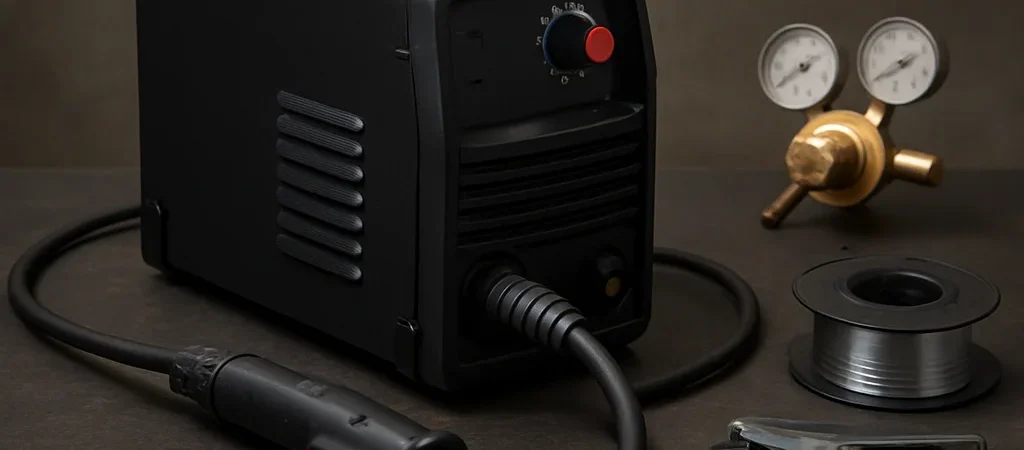
Gas-shielded MIG is a common choice for clean work indoors, but it requires a shielding-gas cylinder and a draft-controlled area. Self-shielded flux-core wire avoids the gas cylinder and can be useful outdoors, though it typically produces more smoke and slag that must be removed between passes. Neither option makes wind, fumes, or poor ventilation harmless; choose a process you can use safely in your actual workspace.
Check the whole setup
Before comparing models, verify the electrical supply the machine requires, the outlet and circuit available, and whether your space can accommodate a cylinder if you choose gas. Then compare included accessories, wire compatibility, adjustment controls, warranty terms, and the cost of any essential items not in the box. Some links in our equipment guides may earn Weld and Build Guide a commission; that does not change the comparison criteria or add a cost to you.
A sensible shortlist has a clear reason for every candidate: one may fit your available power, another may offer a process better suited to your projects. Read the manufacturer’s manual before setup, and do not treat a feature list as a substitute for a safe, properly wired workspace.
Compare equipment for your MIG setup
Match the machine, wire and accessories to your process and the work described above. These links search Amazon; check the exact specifications and compatibility before ordering.