

We may earn money or products from the companies mentioned in this post.
For a first project, skip the ornate garden sculpture and make a simple two-piece steel bracket instead. It gives a new welder room to practice marking, cutting, clamping, and short welds without requiring a complicated design. Treat it as a learning exercise, not as a load-rated support for anything overhead or safety-critical.
Keep the design simple
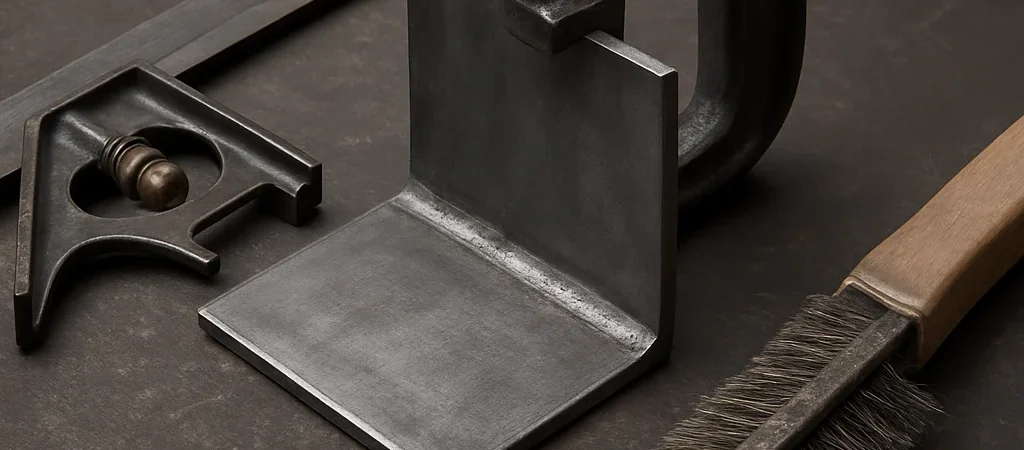
Use two pieces of mild-steel flat bar or angle that you can hold securely, and choose dimensions that suit your intended practice rather than relying on a universal template. Clean the joint area to bare metal, remove burrs, and check that the pieces sit together without rocking. A square and clamps help keep the parts aligned while you work.
Practice fit-up before welding
Mark your cut lines clearly and verify them before cutting; small errors compound when the pieces meet at an angle. Arrange the parts on a stable, noncombustible work surface, then check the joint from more than one direction. Make a few tacks and recheck alignment before proceeding, because correcting a shifted part is easier before a full weld.
Make safety part of the build
Wear a properly rated welding helmet, safety glasses, suitable gloves, and clothing that covers exposed skin; protect nearby people from arc flash with an appropriate screen. Remove combustible material from the area, keep a suitable fire extinguisher accessible, and arrange ventilation that addresses both welding fumes and the process you are using. Follow the welder’s manual, and inspect the work area for smoldering material after welding.
When the bracket cools, inspect the fit and welds and note what you would change on the next attempt. Grind only where the design calls for it, while wearing appropriate eye and face protection. Keep the project for practice or light, noncritical use; a beginner exercise is not proof that a part is safe for a structural or lifting application.
Find tools for fit-up practice
Clamping and checking alignment are central to fit-up practice. These Amazon searches cover common tools; select the sizes and types that fit your project.